Someone asked me this yesterday. Actually, someone asks me this every week. Usually after reading a blog post that threw both terms around like common knowledge.
They aren't common knowledge. The names sound like corporate jargon.
Short version. On-page SEO is stuff you do on your site. Off-page SEO is stuff that happens elsewhere. Both affect rankings. One you can fix this afternoon. The other takes months and a pile of ignored emails.
On-Page vs Off-Page SEO at a Glance
If you want the quick comparison before diving in:
| Factor | On-Page SEO | Off-Page SEO |
| Control | Full control | Limited influence |
| Speed | Fast results | Slow, gradual |
| Examples | Content, titles, internal links | Backlinks, mentions, outreach |
| Cost | Usually lower | Often higher |
| Results timeline | Days to weeks | Weeks to months |
| Primary goal | Relevance and quality | Authority and trust |
Both matter. They just work on different timelines.
What Is On-Page SEO?
On-page SEO covers anything you can change on your own website.
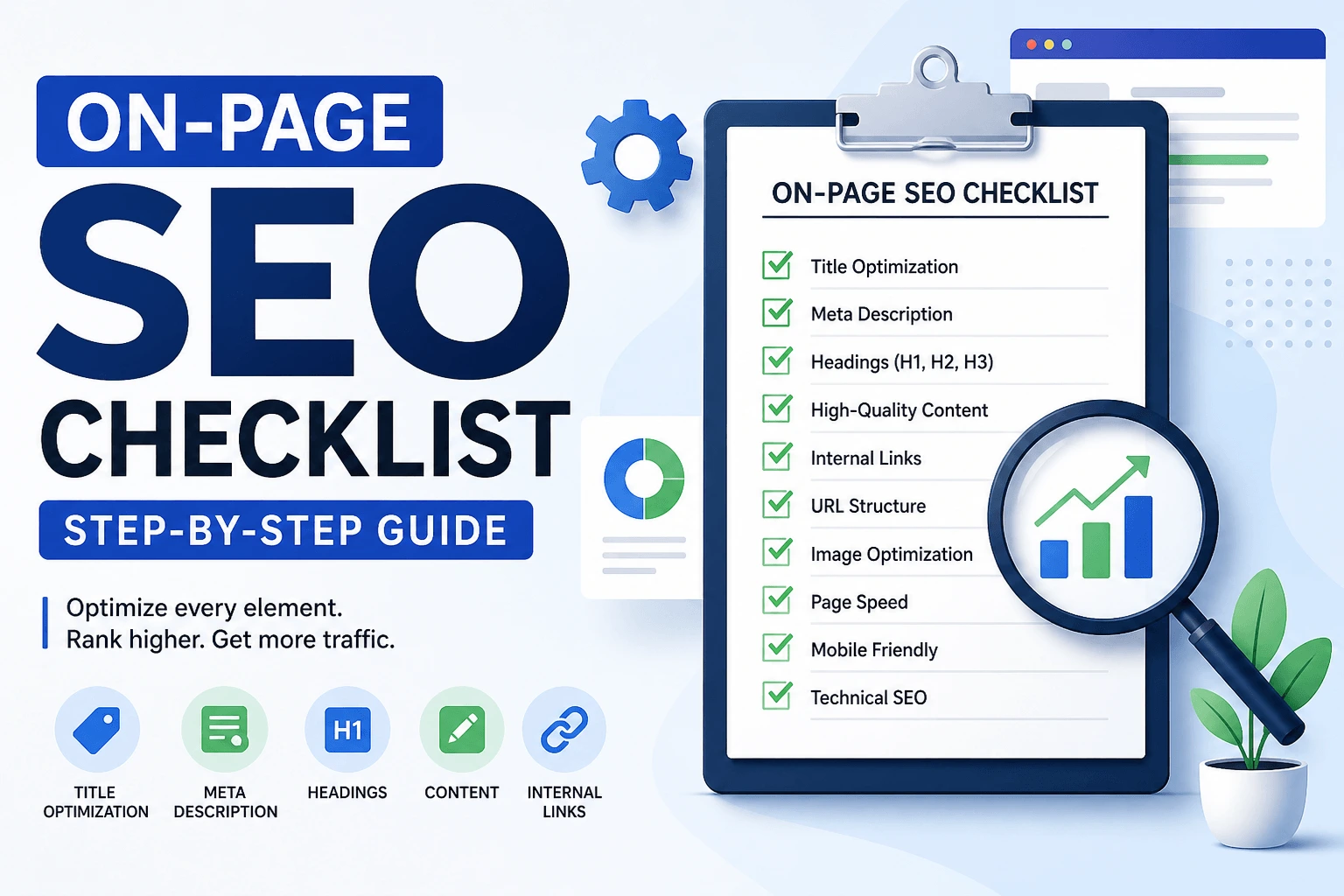
Your content. Title tags. Headings. Internal links. Words on the page and how they're arranged. Image alt text. Page speed. Whether your site works on mobile. These are all on-page ranking factors you control directly.
If you can log in and fix it in ten minutes, it's on-page.
Imagine your house. You pick the furniture. You clean before guests arrive. You control the inside.
Most on-page work is simple. Not easy, necessarily. But simple. Clear titles. Headings that make sense. Links between related pages. Content that answers the question someone typed into Google.
I made an on-page SEO checklist if you want something to follow. No fluff. Just the basics.
What Is Off-Page SEO?
Off-page SEO is everything outside your website.
Backlinks. Brand mentions. Guest posts. Social media noise. Other people talking about you, linking to you, referencing your stuff. These off-page signals build domain authority and link equity over time.
You don't control any of this. You can nudge it. Outreach emails. Relationship building. Creating things worth linking to. But you can't force someone to link. That's their call.
If on-page is your house, off-page is your reputation around town. What gets said when you leave the room. Word of mouth. Slow to build. Impossible to fake.
Backlinks are the biggest piece. We went deeper on that in the link building guide if you want more.
The Difference Nobody Explains Well
Control. That's it. That's the whole thing.
On page SEO focuses on your website. You're in charge. Bad title? Fixed in thirty seconds. Broken internal link? Done before your coffee cools. Content needs work? Start typing.
Off page SEO happens elsewhere. Not your website. Not your decision. You can ask for links. You can build connections. You can make something genuinely useful. But someone else decides whether to link.
This is why I tell people to start with on-page. Faster feedback. You change something and you know if it worked.
Off-page is slow. Months of waiting. And it feels terrible when your on-page isn't ready. You're asking people to recommend a messy house.
And here's the real friction. Most outreach gets ignored. Twenty emails. One reply. That's normal. Still feels like rejection every time.
What On-Page SEO Actually Looks Like
Real stuff, not theory:
- Page titles that say what the page is about
- Headings that make content easy to scan
- Internal links between related pages. This helps search engines and honestly it's the easiest win people skip
- Keywords used naturally, not stuffed in weird places
- Content that matches what someone searched for
- Alt text on images so Google understands them
- Short, readable URLs
- A site that works on phones
- Pages that load before people leave
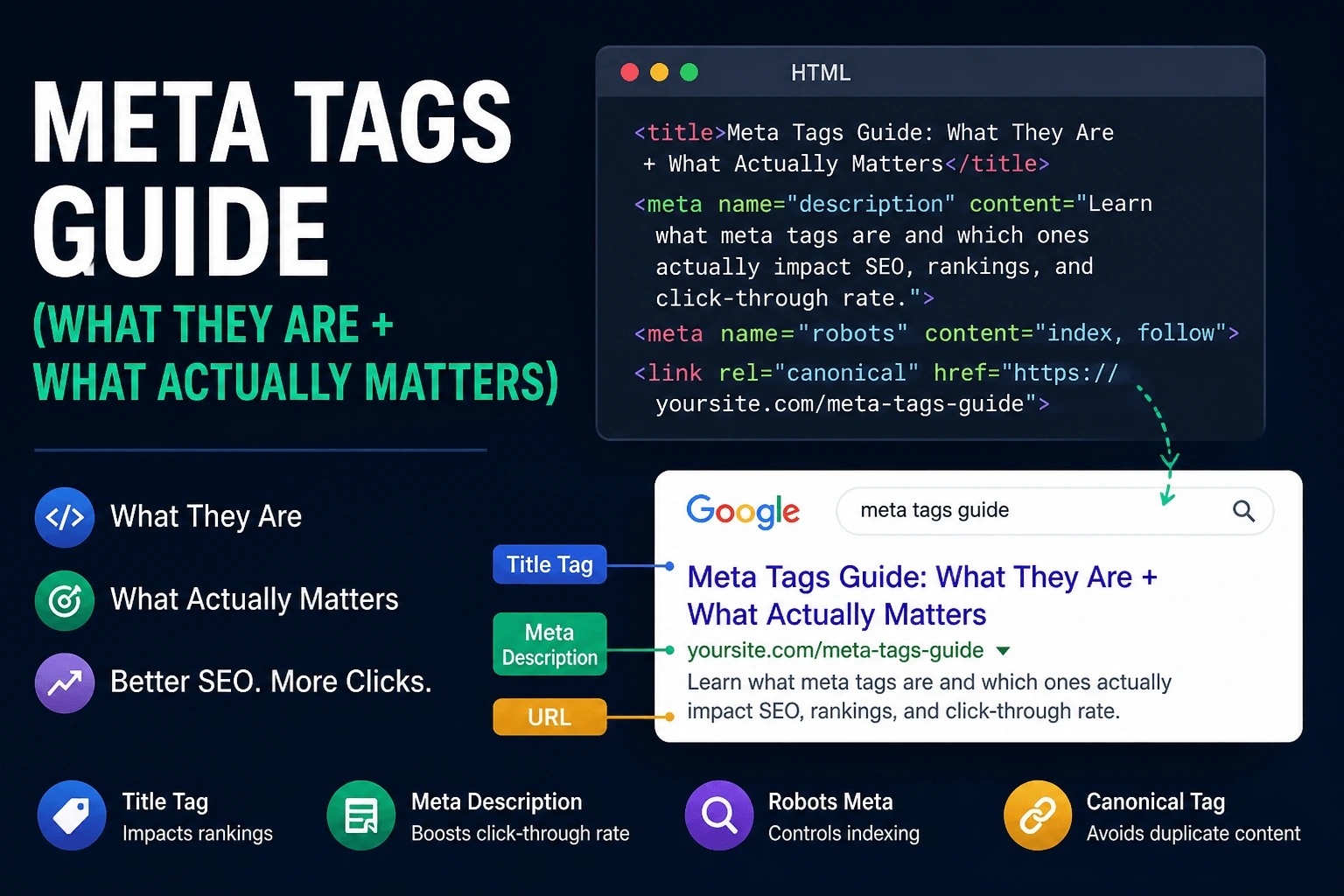
Tools help here. The meta tag checker shows if your titles and descriptions are right. The SEO content analyzer catches problems in your writing.
None of this is complicated. It just needs to get done.
What Off-Page SEO Actually Looks Like
Other side of the coin:
- Getting other sites to link to you
- Guest posts on real sites in your space
- Relationships with people who might link someday
- Brand mentions, even without a direct link
- Social media sharing
- Reviews and testimonials
- Showing up in communities where your audience hangs out
Some of this happens on its own. Some needs work. Depends on your niche.
Annoying part. You write a great guest post. Wait six months. Maybe it helps rankings. Maybe it doesn't. That's normal. Doesn't mean you messed up. Off-page SEO is just slow.
Which One Matters More?
Both. Neither. It depends.
I know. Not the answer you wanted.
On-page is your foundation. Bad content and a broken site won't get saved by backlinks. I've watched people chase links for months while their pages read like robot vomit. Doesn't work.
If your site is brand new, backlinks usually aren't the first problem. The first problem is that the content isn't strong enough yet. Fix that first.
But after your on-page is solid? Off-page becomes the bottleneck. Two sites. Same quality content. The one with better backlinks wins. Nearly every time.
Google looks at both sets of ranking factors. Content gets you considered. Authority from links gets you ranked.
New site? Small site? On-page first. Every time. You control it. You can act on it now.
Good content stuck on page two? Off-page is probably the missing piece.
Mistakes I See Constantly
I've done several of these personally:
- Chasing backlinks while on-page is a wreck. Clean your house first.
- Stuffing keywords into titles like the year is 2009. Google sees it.
- Buying cheap backlinks then panicking when rankings drop. Expensive to undo.
- Skipping internal links entirely. Easiest ranking win and people ignore it.
- Treating SEO like one thing. It's not. Content, backlinks, technical health all connect.
- Thin content with hopes that off-page fixes everything. It won't.
How They Feed Each Other
Not separate strategies. Connected.
Solid on-page makes off-page easier. Useful content gets linked naturally. Good site structure helps backlinks pass more value. Technical SEO improvements make your site a better destination for anyone who follows a link.
Solid off-page boosts on-page work. Same optimized page with strong backlinks outperforms the one without. Domain authority compounds the value of every on-page optimization you make.
Top ranking sites usually have both. Decent content. Clean on-page. Real backlinks from real sites. Technical health you can verify with a free SEO checker.
No secret trick. Just steady work on both. I know that's boring. Sorry.
f you're new to this, forget off-page SEO for now. I mean it.
Focus on on-page. Write decent content. Fix your titles and headings. Add internal links between pages. Make sure your site works. Our SEO guide for beginners helps if you need a starting point.
Once that stuff is actually solid, not "I think it's fine" solid, then think about backlinks.
On-page gives you quick feedback. Change something, see what happens. Off-page is the long game. Play it after the foundation is set.
Don't repeat my mistake. Six months chasing links to a site that wasn't ready. Fix what's in front of you first.
Now go look at your title tags. I'll be here.