Every few months someone publishes a case study showing how improving page speed led to dramatic ranking increases. And every few months someone else publishes a case study showing how improving page speed did absolutely nothing for rankings.
Both can be true. It depends on what else was happening on the site at the time. It depends on the competition. It depends on a hundred other factors that case studies rarely control for.
The debate about page speed vs SEO has been going on for years. Google says page speed and page experience are ranking signals. SEOs argue about how much it actually matters. Site owners just want to know whether they should spend their limited time optimizing images or writing better content.
The answer is more nuanced than most people admit. Let me walk through what we actually know.
Is Page Speed a Ranking Factor
Yes. Google has confirmed this multiple times. Page speed and page experience signals are ranking factors.
But that doesn't mean what most people think it means.
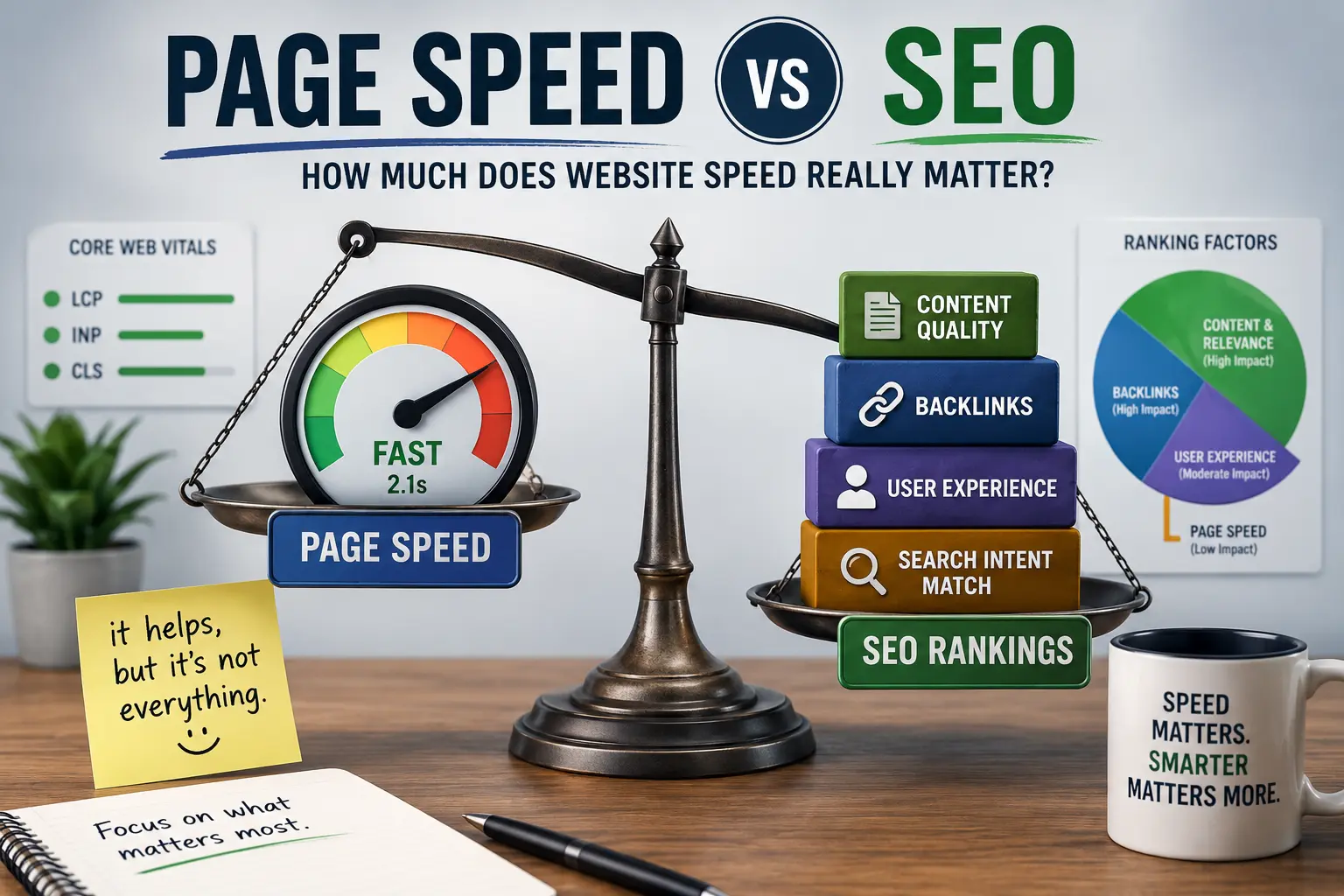
Google uses hundreds of ranking signals. Page speed is one of them. It's not one of the big ones. Content quality, relevance, backlinks, and user intent alignment all carry more weight. Speed is usually a tiebreaker, not the deciding factor.
Think of it this way. If two pages have equally good content, equally strong backlinks, and equally well-optimized on-page elements, the faster page might rank higher. That's the scenario where speed matters. How often does that exact scenario happen? Not often. Most search results have clear winners. One page is obviously more relevant or authoritative than the others. Speed doesn't override that.
What speed does affect is user experience. A slow page frustrates visitors. Frustrated visitors leave. They bounce. They don't convert. They don't come back. These behavioral signals might indirectly affect rankings. But the speed itself isn't the direct cause. The poor user experience is. The speed caused the poor experience. But Google is measuring the experience, not the speed directly.
Our Core Web Vitals guide covers the specific metrics Google uses to measure page experience.
What Google Actually Says About Speed and Rankings
Google has been surprisingly transparent about this. They've said repeatedly that page speed is a ranking factor but that relevance and quality matter more.
The official word from Google is that the page experience signal, which includes Core Web Vitals, is one of many signals. They've explicitly stated that a page with poor Core Web Vitals can still rank well if the content is highly relevant and high quality.
They've also said that the page experience update was designed to be subtle. Not a massive shakeup. Not something that would dramatically reorder search results. A gentle nudge toward better user experience.
Page Experience also includes HTTPS and the absence of intrusive interstitials, although Core Web Vitals receive most of the attention today. The full picture is broader than just speed metrics. Google primarily evaluates Core Web Vitals using real-user Chrome data when enough field data is available.
I've watched enough algorithm updates to believe them on this. When Google wants to dramatically change rankings, they do it. Core updates reshape the search landscape. The page experience update didn't do that. It was subtle. Just like they said it would be. Some sites noticed a small shift. Most didn't notice anything at all.
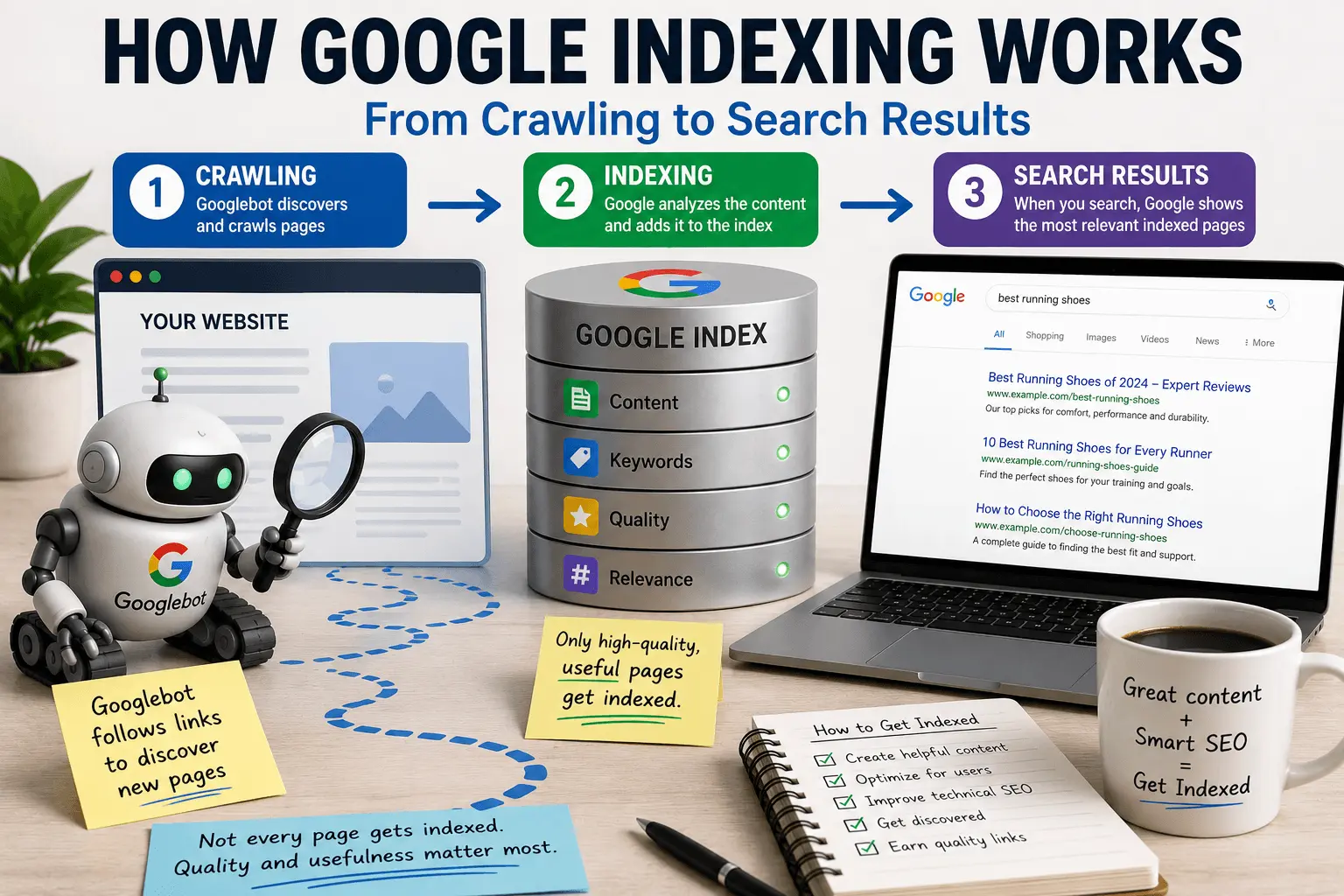
Our guide on how Google indexing works covers the broader ranking process.
Why SEOs Overestimate Page Speed
There's a reason the SEO industry talks about page speed constantly. It's not because speed is the most important ranking factor. It's because speed is measurable.
You can run a test. You can see a number. You can make a change and see the number improve. That's satisfying. It feels like progress. It produces a report you can show to clients or bosses.
Content quality is harder to measure. How do you quantify whether one page is better than another? You can look at word count, but that's superficial. You can look at rankings, but those are influenced by dozens of factors. There's no single number that tells you your content is good.
Backlink quality is harder to measure. Domain Rating and Domain Authority are third-party estimates. They're useful. They're not Google's actual metrics. You can count links. You can't easily quantify their value.
Search intent alignment is harder to measure. Does your page actually answer the question the searcher was asking? The only real test is whether it ranks and whether visitors stay. Both are lagging indicators.
Speed has numbers. Clear, unambiguous numbers. PageSpeed Insights gives you a score out of 100. Core Web Vitals are either green, yellow, or red. You can optimize toward a clear target. That psychological satisfaction leads people to overinvest in speed optimization while underinvesting in harder-to-measure activities that matter more.
This isn't to say speed doesn't matter. It does. But the amount of attention it gets in the SEO industry is disproportionate to its actual impact on rankings. The measurability bias is real.
What the Data Shows About Speed and Rankings
The correlation studies tell an interesting story. But they need to be read carefully.
Multiple large-scale studies have found a correlation between page speed and rankings. Faster pages tend to rank higher. The correlation is real. It's been replicated across different datasets and different time periods.
But correlation studies can only show relationships, not prove causation. Faster pages also tend to be on better-optimized sites. Sites that invest in speed also tend to invest in content quality, internal linking, schema markup, and other SEO fundamentals. The speed might not be causing the higher rankings. It might just be correlated with all the other things that do.
When researchers control for other factors like backlinks and content length, the relationship between speed and rankings becomes much weaker. Still present. Still measurable. But much weaker. The speed alone explains very little of the ranking variation.
What the data consistently shows is that extremely slow pages do worse. A page that takes 10 seconds to load is going to struggle. But the difference between a 2-second page and a 4-second page is much smaller than most people expect. The ranking curve isn't linear. It drops off sharply at the slow end and is relatively flat in the middle.
Our SEO guide for beginners covers the fundamentals that matter more than speed.
When Page Speed Actually Matters
There are specific scenarios where speed matters more than usual.
Mobile search is one. Mobile users are often on slower connections. They're less patient. A page that loads in 2 seconds on desktop might take 6 seconds on a 3G connection. Google knows this. Mobile page speed matters more than desktop page speed. The thresholds are the same. The experience is worse.
Ecommerce is another. For ecommerce websites, even small delays can reduce conversion rates. When visitors have many alternatives, faster pages often keep more people engaged through checkout. Speed matters for ecommerce not because of rankings but because of conversions. You can measure the cost of slowness in dollars.
Local search is affected by speed. When someone searches for a nearby business on their phone, they want information quickly. A slow local business page loses customers to faster competitors. The local pack is competitive. Every edge helps.
News and trending topics. Google prioritizes fresh content for news and trending searches. Speed helps with discovery and indexing. A slow news site might get crawled less frequently and miss the window for breaking stories. Being first matters for news. Pages still need to be crawlable, indexable, and linked internally. Speed alone won't get a page into Google's index.
Highly competitive queries. When you're competing against sites with equally strong content and backlink profiles, speed can be the differentiator. But this only applies at the very top of very competitive search results. Most sites aren't in that position.
On very large websites with hundreds of thousands of pages, speed can also affect crawl efficiency. Faster servers can respond to more requests during Google's crawl sessions, allowing more pages to be discovered over time. For most small and medium websites, however, this effect is minimal compared to publishing quality content and maintaining a healthy internal linking structure. Our guide on how Google indexing works explains crawl efficiency in more detail.
Our how to improve page speed guide covers the practical fixes.
When Page Speed Doesn't Matter Much
There are also scenarios where speed barely matters for rankings.
Low-competition queries. If you're the only site that's written a comprehensive guide to a specific topic, you'll rank regardless of speed. Google wants to show the best answer. If you have the only answer, speed is irrelevant. A slow page with unique information beats no page at all.
Sites with strong backlink profiles. Authoritative sites can get away with mediocre performance. Wikipedia isn't fast. It ranks for everything. Authority overrides speed almost every time. A link from a major news site is worth more than shaving a second off your load time.
Content that's genuinely unique. If you have information nobody else has, Google wants to show it. Speed won't prevent your unique content from ranking. It might affect how many people stay to read it. But it won't prevent it from appearing in search results. Original research. Unique data. Personal experience. These things are rare and valuable.
Pages that are already ranking well. If a page is at position one with a 4-second load time, improving speed to 2 seconds probably won't move it to position zero. It's already at the top. Speed improvements at that point help user experience more than rankings. The ranking gain already happened. The next unit of ranking improvement comes from something else.
While Google Discover doesn't officially rank pages by speed alone, fast-loading pages generally provide a better mobile experience, which can improve user satisfaction and engagement. Speed supports the experience. It doesn't drive discovery on its own.
The Real Impact of Speed: User Experience
This is where speed actually matters. Not in the algorithm. In the browser.
A slow page feels broken. Visitors don't know about Core Web Vitals. They don't know about LCP or INP or CLS. They don't care about your PageSpeed Insights score. They just know the page isn't working. They leave.
Bounce rate increases with load time. Google's own research shows that the probability of bounce increases 32 percent as page load time goes from 1 second to 3 seconds. By the time you reach 5 seconds, the probability increases 90 percent. That's not an SEO problem. That's a business problem.
Conversion rates drop with load time. Every second costs you money. Not hypothetical algorithm money. Real visitor money. People who were going to buy something, sign up for something, or read something. Gone because the page took too long. They won't email you to complain. They'll just leave.
Pages per session decrease. Visitors who experience slow pages view fewer pages overall. They're less likely to explore your site. They came for one thing. The page was slow. They leave. They don't browse your other content. They don't discover your other products.
Return visits decrease. People remember slow sites. They might not remember why they don't visit your site anymore. They just associate it with a vague sense of frustration. They click your result less often in future searches because their brain remembers the bad experience even if their conscious mind doesn't.
This is the real case for page speed. Not rankings. User experience. A faster site is a better site. Better sites get more traffic, more engagement, and more conversions. The ranking boost is a nice bonus. The user experience improvement is the main event.
Core Web Vitals as a Ranking Signal
Core Web Vitals are Google's specific page experience metrics. LCP, INP, and CLS. They measure loading speed, responsiveness, and visual stability.
Google has confirmed that Core Web Vitals are used as a ranking signal. Pages that pass all three thresholds may receive a slight ranking benefit compared to pages that don't.
The key word is slight. Google has been explicit that relevance and quality are more important. A page with poor Core Web Vitals but excellent content will still outrank a page with perfect Core Web Vitals but mediocre content.
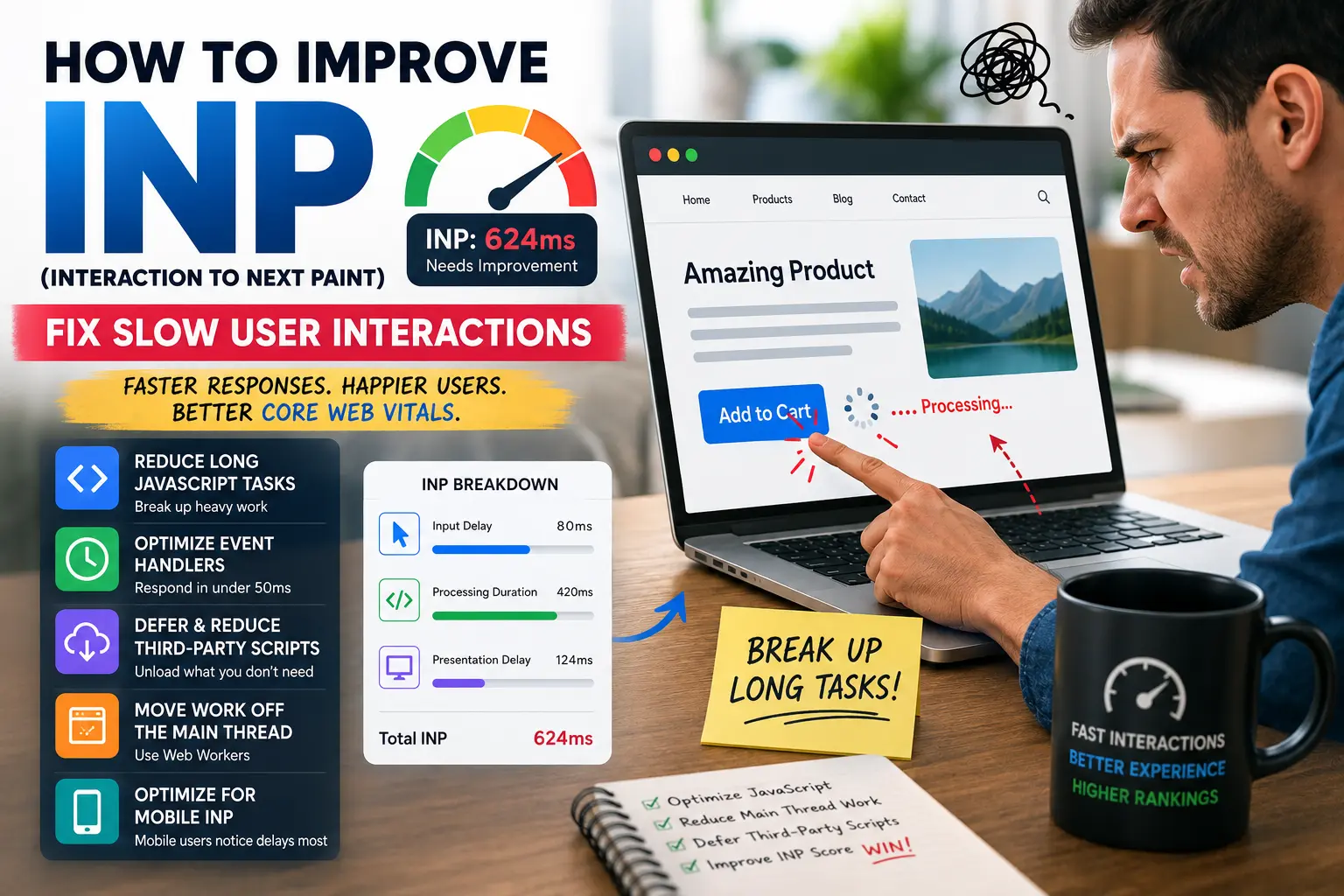
The Core Web Vitals thresholds are also surprisingly generous. LCP under 2.5 seconds. INP under 200 milliseconds. CLS under 0.1. Many reasonably optimized sites already pass these thresholds without specific Core Web Vitals optimization. If you're already in the green, further optimization has diminishing returns for rankings.
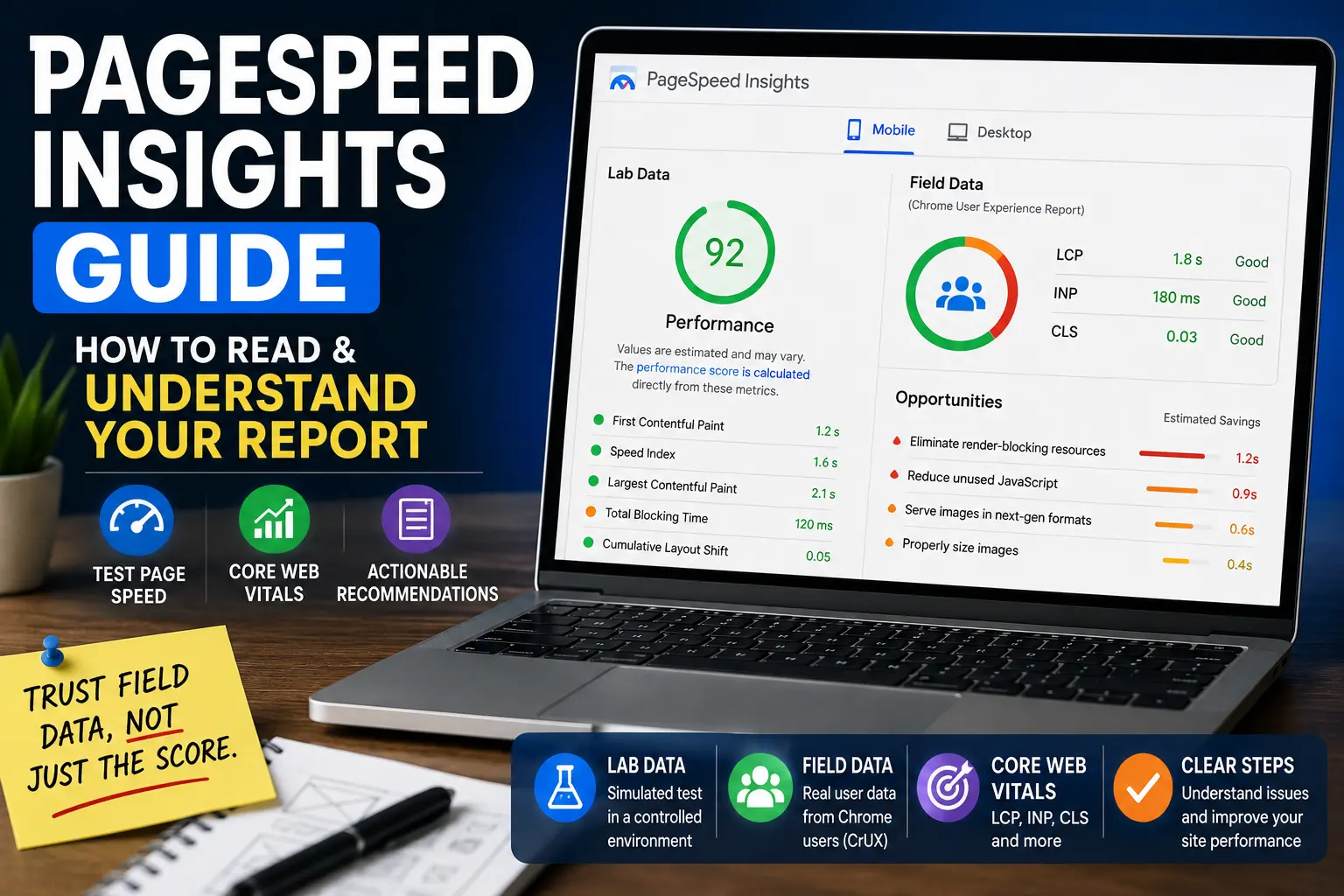
Our PageSpeed Insights guide covers how to measure these metrics.
The Difference Between Speed and Core Web Vitals
Not all speed improvements improve Core Web Vitals. And not all Core Web Vitals improvements make your site feel faster.
You can improve your PageSpeed Insights score from 60 to 90 by minifying CSS and deferring JavaScript. Your pages might not feel any faster to actual users. The lab test scores improved. The user experience didn't change. You optimized for the test, not for the user.
You can make your site feel dramatically faster by optimizing images and using a CDN. Your Core Web Vitals might not change much if they were already passing. The user experience improved. The metrics stayed the same. You optimized for the user, not for the test.
This is why focusing on Core Web Vitals scores alone is misleading. The scores measure specific technical metrics. They don't measure perceived performance. A page with perfect Core Web Vitals can still feel slow if the content takes a long time to become useful.
Optimize for user experience first. Let the metrics follow. Not the other way around. A page that feels fast is fast. A page that scores well but feels slow is still slow.
Where to Invest Your SEO Time
Given that speed matters but isn't everything, where should you spend your limited time?
Content quality comes first. Always. A fast page with bad content won't rank. A slow page with great content probably will. Content is still the foundation of SEO. Write something useful. Answer the search intent. Make it better than what's already ranking.
Backlinks come second. Authority is the strongest ranking signal. A site with strong backlinks can overcome mediocre performance. A fast site with no backlinks will struggle to rank for anything competitive. Links are harder to get than speed improvements. They're also more valuable.
On-page optimization comes third. Title tags. Meta descriptions. Heading structure. Internal linking. Schema markup. These help Google understand your content. They're relatively easy to implement. They have more ranking impact than speed improvements.
Technical SEO comes fourth. Making sure Google can crawl and index your pages. Fixing broken links. Submitting sitemaps. These are foundational. Without them, speed doesn't matter because your pages aren't in the index.
Speed comes fifth. For a new website, publishing another high-quality article usually produces a bigger SEO return than spending another day chasing a perfect PageSpeed score. Once you have great content, strong backlinks, solid on-page optimization, and clean technical SEO, then speed can give you an edge. For most sites, speed is the last 5 percent, not the first 50 percent. Don't spend 50 percent of your time on the last 5 percent of the problem.
Our SEO guide for beginners covers this prioritization framework in more detail.
If Your Website Is...
Here's a quick reference for where to focus your effort right now.
- Loading in 8+ seconds → Fix immediately. Compress images. Enable caching. This is an emergency.
- Around 4 to 6 seconds → Optimize images, set up a CDN, and clean up third-party scripts. Big wins are still available.
- Around 2 to 3 seconds → Your speed is decent. Focus on content quality and backlinks before chasing perfect scores.
- Already passing Core Web Vitals → Stop obsessing over PageSpeed numbers. Spend your time on content, links, and user experience.
Our image compressor and PNG to WebP converter handle the image optimization piece quickly.
How to Think About Page Speed Investments
Page speed improvements have costs. Developer time. Hosting costs. Plugin subscriptions. The question isn't whether speed matters. The question is whether the next speed improvement is worth more than the next content improvement or link building effort.
If your site takes 8 seconds to load, fix that. The user experience is terrible. You're losing visitors. The ranking impact is secondary to the fact that nobody sticks around long enough to read anything. This isn't about rankings. It's about having a functional website.
If your site takes 3 seconds to load and your Core Web Vitals are yellow, improvements are worth making. But don't spend a month chasing a perfect score. Fix the obvious things. Images. Caching. CDN. Move on. Three seconds is acceptable. Two seconds is better. One second might not be worth the effort.
If your site takes under 2 seconds to load and your Core Web Vitals are green, you're done. Additional speed improvements will have diminishing returns. The time is better spent on content, links, or literally anything else. Your site is already faster than most of the internet.
The speed optimization rabbit hole is deep. You can spend forever shaving milliseconds off your load time. At some point you have to ask whether that time would be better spent on activities that move the needle more. Usually it would.
Page speed matters. It matters for user experience. It matters for conversions. It matters for whether visitors stick around or leave. These are real, measurable business outcomes.
It matters less for rankings than most people think. Google uses hundreds of signals. Speed is one of the smaller ones. Content quality, relevance, and backlinks dominate the algorithm. Speed is usually a tiebreaker, not the deciding factor. It's the thing that helps when everything else is equal.
Fix the obvious speed problems. Compress your images. Enable caching. Use a CDN. These improvements make your site better for everyone. The ranking benefit is a bonus, not the reason to do it. Do it because your visitors deserve a site that works.
Then focus on what actually moves the needle for SEO. Write better content. Earn better links. Optimize your on-page elements. Make sure Google can find and index your pages. These activities will impact your rankings more than shaving another 200 milliseconds off your load time.
Don't let the page speed debate distract you from the fundamentals. A fast site with bad content is still a bad site. A slightly slow site with great content is still a great site. The fastest page on the internet won't rank if it doesn't answer the searcher's question. Build the best resource first, then make it as fast as reasonably possible. That's usually the strategy that wins over time.